
Top 10 miscalculations People Make When Using Alcohol Disinfectant Spray
A quick spray feels like a neat fix. One press, a light mist, and the space looks clean. But looks can be deceiving. Numerous of us use alcohol disinfectant sprays in ways that cut its power or produce small safety risks.
This guide lists the common miscalculations and how to avoid them, so each spray actually protects your space.
1) Spraying dirty shells
Disinfectants are made to kill germs, not remove visible dirt. Dust, food particles, and bodily soils can block contact between the disinfectant and the surface, reducing its effectiveness.
Do it right: Wipe the surface with a regular cleanser first. Remove debris. Then disinfect.
2) Wiping too soon
Alcohol needs contact time to work. However, much of the benefit is lost, if you spray and wipe immediately.
Do it right: Check the label for the required wet time. Spray enough to keep the surface visibly wet for that duration. Then let it air dry or wipe it down
3) Using the same cloth everywhere
Reusing one cloth across numerous spots spreads germs around.
Do it right: Use fresh disposable wipes or a clean microfiber per zone. For larger areas, move from clean to dirty sections and change cloths frequently.
4) Spraying electronics the wrong way
Direct wetting of switches, remote controls or keyboards can damage them.
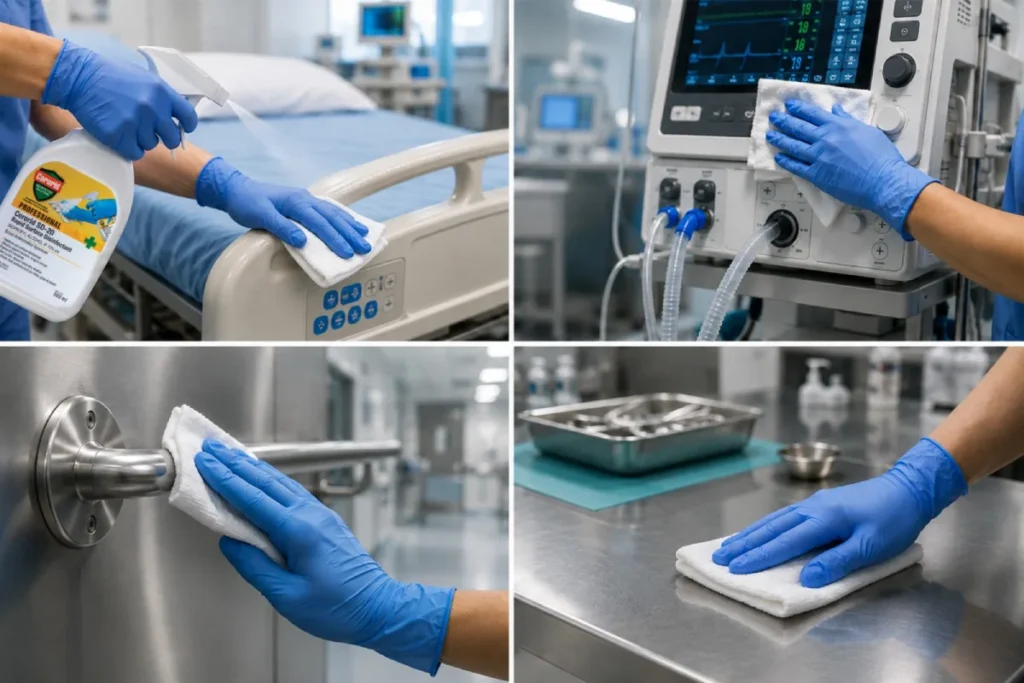
Do it right: Spray onto a lint-free cloth first. Gently wipe the device. Avoid excessive moisture around ports, seams, and openings. For touch screens, follow the device manufacturer care guide.
5) Mixing products
Do not mix alcohol with bleach, acids, or other strong cleaners. It can create harmful fumes and reduce cleaning effectiveness.
Do it right: Follow manufacturer’s instructions.
6) Ignoring high-touch points
We often spray big floors and forget the small spaces that matter. Germs love handles and buttons.
Do it right: Make a quick route. Include door handles, lift buttons, rails, taps, fridge handles, chair backs, light switches and phone handsets.
7) Spraying near flames or hot equipment
All alcohol sprays are flammable. Kitchens, open flames and hot motors increase the threat.
Do it right: Turn off ignition sources. Let hot surfaces cool. Ventilate the area. Store the can or bottle away from heat.
8) Using on skin or fabrics by habit
Surface disinfectants aren’t hand rubs or fabric refreshers. They can irritate skin and may stain or fade fabrics.
Do it right: Use hand sanitizer for skin. Patch test on hidden fabric if the label allows use on fabrics. When in doubt, don’t spray on soft surfaces.
9) Spraying food-contact areas without a rinse
Dining tables and kitchen counters frequently host food. Numerous surface products require a potable water rinse before food touches the area again.
Do it right: Read the label. However, wipe with clean water after the listed contact time, if a rinse is needed.
10) Guessing the dose and storage
Too little liquid dries before the contact time. Store the product as per label instructions, away from heat and direct sunlight.
Do it right: Apply enough to wet the surface evenly. Cap tightly after use. Check dates and rotate stock.
Choosing and using your spray with confidence
Picking the right product
- Look for clear germ-killing ingredients on the label.
- Check that it’s ready to use, not a concentrate.
- Note contact time
- Make sure the packaging suits the job. A fine mist is helpful for small, high- touch surfaces.
A handy option for everyday touchpoints
Cororid Ready-to-Use Surface Disinfectant 200 ml Spray is designed for quick, even coverage on common surfaces in offices, clinics, schools, hotels and stores. The compact bottle fits in housekeeping kits and reception decks. A fine mist helps wet small items like handles and switches without drips. Jet spray enables it to reach difficult to access areas. Off buttons avoid unnecessary evaporation of alcohol. Always follow your manufacturer’s label and the directions on the label.
A simple routine to follow
- Pre-clean the surface to be disinfected if visibly dirty.
- Spray enough to keep it wet for the stated time.
- Don’t wipe beforehand unless the label allows it.
- Work top to bottom, clean to dirty.
- Finish with high-touch points.
- Wash hands after the task.
Quick answers
Can I spot the air to “clean” a room?
No. Alcohol sprays are for hard, porous and non-porous surfaces. For air or whole- room disinfection, follow devoted products and trained procedures.
Is more alcohol always better?
Not always. Very high concentrations can evaporate too fast and loses its antimicrobial action. Use the strength specified by WHO/CDC and allow the contact time.
How frequently should I spray?
Base it on risk and traffic. High-touch points in busy areas may need several rounds a day. Low-risk spaces may need less.
What if a surface is sensitive?
Test on a small hidden area first. Apply a small amount of the disinfectant spray and wait for it to dry. Check for any compatibility issue.
What about screens and coated surfaces?
Do not spray the disinfectant spray directly on them. Instead, apply it to a soft, lint-free cloth and gently wipe the surface. Use light pressure and let the surface air dry.
The takeaway
A good product only works when used the right way. Avoid the 10 mistakes above and make each spray count. However, if you manage, hospital, food manufacturing unit, clinic, office or store; set a simple route. That’s how an alcohol disinfectant spray becomes a reliable daily habit, not just a routine spray.